

EDITOR’S NOTE:
This is Part 3 of the refreshed Building a Village series, originally published in two parts in early 2024. I’ve merged and updated both pieces here because they tell one story. If you’re joining us, I’d encourage you to start with Part 1.
On my desk sits a wooden placard with the words “Be Who You Needed When You Were Younger” carved into it. While working with the school I mentioned in my last post, I was given this beautifully crafted piece while meeting with Manufacture Good, a nonprofit woodworking organization focused on helping young men bridge the intimidating gap between unemployment and meaningful employment. When I returned to my office, I set it on my desk to remind me of my “WHY.” It inspires me every day, calling me to show up in the lives of others in ways people didn’t always show up for me.
That’s not a slight on the people who did show up for me, nor is it an indictment of my family. There was a lot of love in the home and family I grew up in. But there was also a lot of brokenness. If you’ve read my writing, you know I don’t shy away from the beauty and brokenness of life. We are complex beings. Nothing about us is superficial or shallow. We are descendants of others. We have history. We have inherited both wealth and poverty. Some are bequeathed financial wealth, while others inherit spiritual wealth. Some have received a deep sense of love, acceptance, and belonging, and others have received a poverty of not knowing who they are and why they are here. I’ve lived long enough to know how incredibly loved I am.
Still,
brokenness
persists.
WHO I WAS WHEN I WAS YOUNGER
At a young age, I learned the art of being alone. I could spend hours by myself in a room playing with toys or video games. I had a vivid imagination that provided endless entertainment. I created vast worlds of mystery and adventure, named all my toys, and gave each one an elaborate origin story about how it made it to the refuge of my room.
My room was a refuge.
It was a safe place for me at a time when I did not always feel safe. For the first eight years of my life, my family lived in East Thomas, a once-thriving working-class neighborhood just north of Downtown Birmingham. We lived in the same house where my mother and her eight siblings spent their childhood. Playing in the same dirt. Running the same streets. Eating the same fruit from my grandfather’s garden. Hearing the same trains as they sped through their once-flourishing Black community that had turned into my now aging and deteriorating neighborhood. Breathing the same polluted air that for years has poisoned the bodies of its residents.
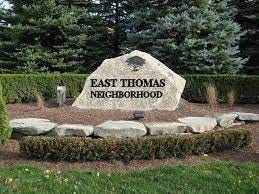
This neighborhood defined much of my childhood. I loved being outside, running around our spacious front and backyards, jumping off our large porch as I played with my sister, cousins, and our two childhood dogs, Treasure and Sasha. Picking fruit from my grandfather’s urban garden. The laughter and the honeysuckle of my grandmother’s house. Though the smell of fresh-cut grass wreaked havoc on my asthma and allergies, and the thick southern air stifled my lungs, I LOVED being outside.
I also remember the day I first became aware that my idyllic neighborhood wasn’t as safe as I once thought.
There was a man. For the life of me, I can’t recall his name. But I remember him. He used to walk the streets of my neighborhood.
Talking.
Laughing.
Singing.
He was a jovial, fun man who always spoke whenever he saw me playing out in our front yard. Whenever I saw him coming, I would move out closer toward the street to say hello and talk for a while. As a child, it felt good to have an adult, not in my family, take an interest in me and ask about my day and how things were going in my little world.
I remember this day because the man acted differently than usual. While he was usually gregarious and outgoing, he seemed hyper and hurried. I didn’t think much of it since I knew plenty of adults whose moods changed based on what was going on in their lives.
But this interaction became more perilous by the moment. He started calling me his son and talking repetitively. He asked if I wanted to walk with him since he was in a hurry. I knew I couldn’t leave the yard, so I declined and said, “Maybe next time.” But he persisted, continuing to call me his “son.” My internal alarm began going off, and I started backing away from the street, saying it was time for me to eat dinner. Insisting that we wouldn’t be gone long, he began to become visibly irritated.
And at that moment, my mother came from inside the house.
SHE LOST IT.
She went full protective mother. Her exact words were, “Don’t call him your son; he is my son, and you have no right talking to my son. Get out of here, and don’t talk to him again.” My beautiful, light-skinned mother turned fire red as she lit into him while he quickly moved down the street. She then turned her fiery gaze on me and told me never to talk to that man again, and if I see him coming, to come inside.
This was the first time I recollect feeling unsafe in my neighborhood, but it wouldn’t be the last. That feeling would persist, moving from my neighborhood into my home and even into my grandmother’s home. But that’s a different story for a different day.
While preparing to write this, I contacted my mom to see if she remembered this event. She didn’t remember the specific incident, but she did remember the man. She said he grew up in a home that “wasn’t right” — a mid-century Southern way of saying he probably endured some pretty terrible things and learned to cope through vice and viciousness. She called him menacing. He had a reputation.
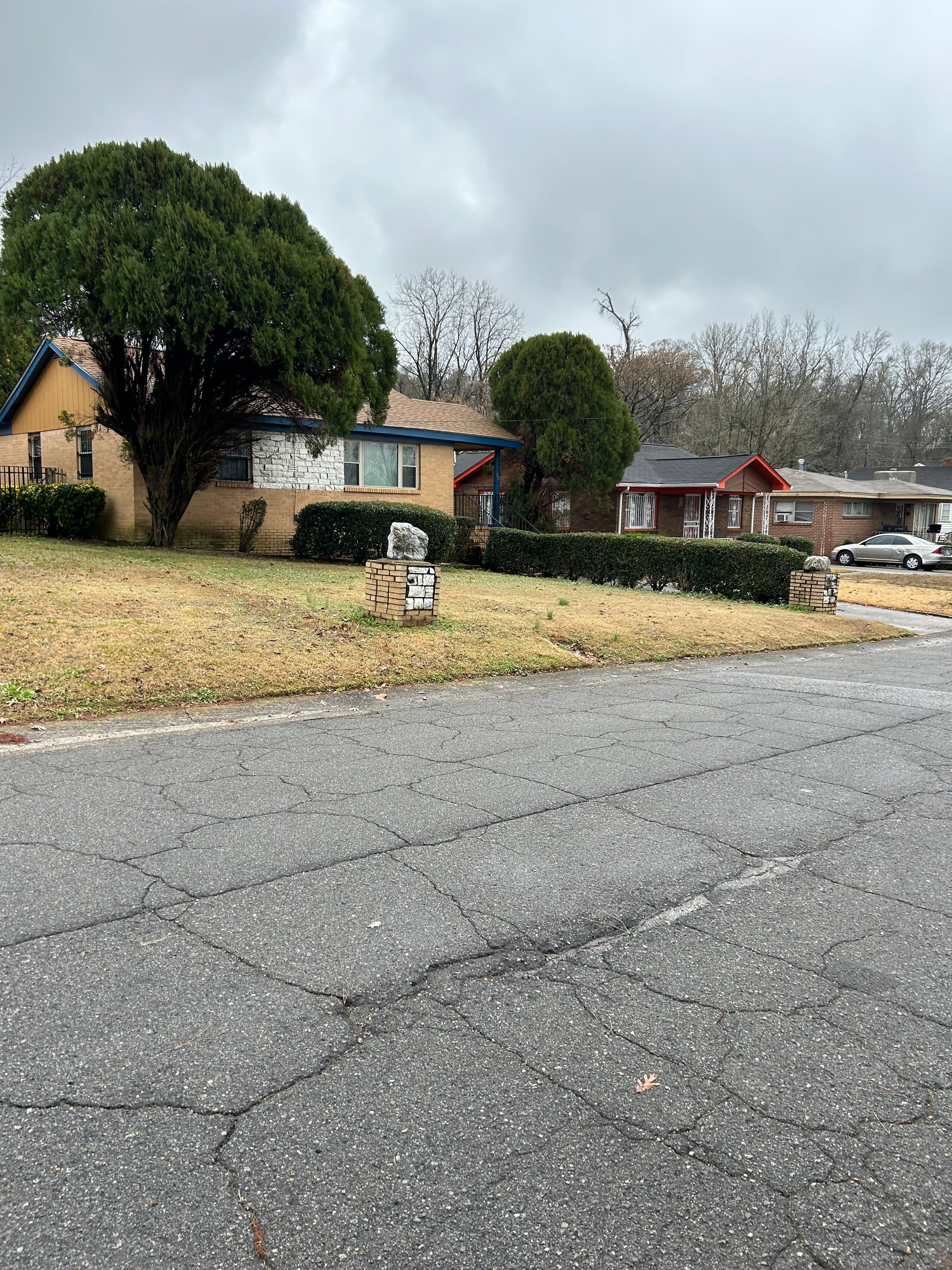
I also went back to my old address and walked those streets. Everything felt so familiar and unfamiliar at the same time. The houses are much older, and many have fallen into disrepair. A working-class community ravaged by the elders who struggled so hard to own property, dying and leaving their homes to those who didn’t always appreciate their inheritance. So many of the jobs it once boasted have departed. Many who can afford to leave have already left, leaving a shadow of the place I once called home. My mother and I had the same question as I drove through: “How did this happen?” Who is ultimately responsible, and why have so many of our neighborhoods in Birmingham suffered a similar fate?
TOO MANY KIDS AND ADULTS SHRINK THEMSELVES TO SURVIVE
What I’ve learned about men and women with a reputation is that they can destroy our village and make the people we want to flourish feel unsafe and harmed. Not every reputation is trustworthy; some arise from slander, lies, and envy. But some spread through the quiet and often overlooked misdeeds of the powerful, preying on the weak. This man was a tiger, and my mother ran him off. But I lost my sense of safety that day. I no longer felt safe in my front yard. So I moved inside, shrinking my world to protect myself.
I recently began reading bell hooks’ book Belonging: A Culture of Place. As I think about place and the villages we build, I cannot escape the need to create places of freedom and safety. Honestly, I didn’t always have that when I was younger, so I strive to create those spaces for my family, the people I lead, and the young people and families we serve. Having a place of belonging matters. Feeling safe in those places matters more.
As I strive to “be who I needed when I was younger,” I aspire to lead and show up with courage, compassion, competence, and character. Even in my adult years, I’ve seen people afraid to confront tigers, so they let them run wild in families, homes, communities, businesses, boards, and government. These apex predators intimidate and bully others through their power and prestige. Who I need to be now that I’m older is someone who values mission more than the fear of man. Someone willing to curate spaces where people come together to create places where people thrive. Someone willing to cage the tiger.
BEING MORE LIKE WHO I HAD
“I seek to reweave the frayed remnants of family, community, and spiritual values rent asunder in the name of progress. We are at risk of letting our children drown in the bathwater of American materialism, greed, and violence. We must regain our moral bearings and roots and help America recover hers before millions more children self-destruct or grow up thinking life is about acquiring rather than sharing, selfishness rather than sacrifice, and material rather than spiritual wealth.”
~ Marian Wright Edelman, Founder of The Children’s Defense Fund
My life is filled with examples of love, kindness, and grace. So many people have helped me become the man I am today. They’ve sacrificed so much and given me tremendous gifts. Outside of my family, no one else shaped my childhood like Ms. Anderson. In many ways, this section is a letter of appreciation to her and her impact on my life.
My parents felt uncomfortable sending us to our neighborhood schools when we lived in East Thomas. While those schools were pillars of the community during my mother’s day, Birmingham City Schools went through a turbulent period in the 90s and early 2000s. The district had lost thousands of students due to underfunded, significantly under-capacity schools. This led my parents to make the difficult decision of sending us to a private Christian school in Bessemer, Alabama, called God’s Church Christian Academy.
GCCA wasn’t a wealthy school, nor a segregation academy. It was an all-Black school founded to provide hope and second chances. It was in an older building and housed students from Kindergarten through twelfth grade. Large, red brick, always full of life and energy. I had many experiences there. I will share a few, including one that still shapes how I show up as a leader today.
The first time I experienced having to hide my young Black body was for fear of gunshots that rang out from a car firing at students on the basketball court. The terror of looking for my sister as she roamed aimlessly, as bullets flew through the air, I was not sure what to do. I also remember being gathered in an assembly to hear that four fellow students had been killed in a horrific train accident. These are not small things. They formed me.
But we ended up there because my parents had a good relationship with the school leaders, and my sister and I always seemed to get access to the best teachers and resources.
One of those teachers was Ms. Sandra Anderson.
MS. ANDERSON
Ms. Anderson was my teacher for both second and third grade. In second grade, I was a rambunctious student. Filled with energy, I enjoyed wrestling with my teacher for my classmates’ attention. I had gotten good at gaming our reading assignments. I had a phenomenal memory that enabled me to recall information almost verbatim after hearing it. So I would have a classmate read my part of the assigned reading and repeat whatever they said.
Ms. Anderson caught on and, like any good teacher, decided to call on me out of order. I protested that it wasn’t my time, and when that didn’t work, I promptly began acting like a fool. She would have none of it. She called me out and said, “You can’t read. There is nothing funny about being unable to read, but I will teach you.”
That began a journey that changed the course of my life.
Ms. Anderson didn’t just teach me to read; she instilled in me a love for learning. She invited my sister and me to her house after school and worked with us relentlessly. Teaching me how to read and my sister how to praise dance. She created a space where a young Black boy from Birmingham, Alabama, could be honest about his struggles, fears, and inadequacies. She nurtured my giftedness and gave me a necessary skill I lacked.
Reading.
I excelled so much under her leadership that I became a mini extension of her in the classroom. After finishing my work, I would assist other students, patiently answering the questions they asked me. I was being discipled, and I didn’t know it. She started holding me to a higher standard than she held other students to. Her discipline didn’t drive me away, but taught me to respect her more. It also drove home the pain of living beneath your potential.
Jesus’ final words to his disciples in Matthew 28 are a blessing to go and make disciples, baptizing them, and teaching them. Ms. Anderson passed on that blessing to me before I had language for it. She was patient, kind, loving, gracious, and determined. She knew that life for a Black boy who turns into a Black man who can’t read is a treacherous existence. She also knew that an undisciplined leader is no leader at all. She instilled in me that servant leadership is the only way to be a transformative leader.
She was preparing me as a leader and a learner.
To send people out into the world without the skill of reading is one of the greatest betrayals an education system can perpetrate on a student. She knew I needed more than a likable personality. I needed the love of a skillful teacher who was present enough to see me and my struggles and patient enough to teach me through my uncouth behavior. I needed my passion directed with compassion and grace.
She spared me from a violent existence.
I was a loving kid who became an angry kid around the time my parents separated. Leaving God’s Church Christian Academy and moving to Hoover, AL, during my fourth-grade year was a close second contributing factor. So much of the love that Ms. Anderson invested in me was stolen by experiences in those schools. Honestly, some were taken, and others were surrendered or sacrificed on the altar of acceptance.
During my fourth-grade year, I had a teacher who seemed to my nine-year-old mind to be the antithesis of Ms. Anderson. It culminated in me disengaging from school so much that by the end of that year, my mother met with the school because they wanted to either make me repeat fourth grade or place me in special education. My mother vigorously protested, and school leadership said they would need to test me. In her Southern Black mama confidence, she said, “Then you’re just going to have to test him.”
I ACED their test.
Results: Gifted.
As you can imagine, excuses and apologies followed. I loved the young authors camp they offered, and hated interacting with the other students. Legitimately, I needed additional help with my writing. I had just learned to read a couple of years earlier, and spelling was still a skill I was cultivating. I’m still not the best speller. It’s mostly anxiety now, from times when teachers, like my fourth-grade teacher, decided to publicly shame and embarrass me rather than patiently sit with me. When I have to write on a board in public, I have to fight hard not to turn into that scarred, crying boy standing in front of his class as his teacher mocks him.
THE HANDS, FEET, HEART, AND MOUTH OF JESUS
Ms. Anderson was a mentor in my life. I haven’t seen or spoken to her since I left her class, but I honor her everywhere I go. I tell my team about her and encourage them to show the same love and tenacity she showed me. Not to overlook students’ needs or say, “That’s someone else’s job.”
Was Ms. Anderson perfect? To me? ABSOLUTELY. In actuality? No. She was a mother raising her own kids. But she was something better than perfect. She was the hands, feet, heart, and mouth of Jesus to me. Her hands skillfully guided mine as I practiced writing and spelling. Her feet carried me to her home, where I felt safe and cared for. Her heart was open toward me and filled with compassion. Her mouth spoke grace and truth, sternness and encouragement.
It wasn’t until high school that my giftedness was fully realized. Many young, gifted, and Black individuals have a high capacity to achieve. However, their giftedness often leaves them feeling directionless because our broader culture still hasn’t figured out how to care for them without isolating them or pushing them into a "just do one thing" ideology that doesn’t work well for us.
Now I get the opportunity to put into practice the skills and lessons Ms. Anderson taught me. I had the privilege of leading Elevate Birmingham, where we served students and their families, showing up at pivotal points to build transformative relationships. That work laid the foundation for what eventually became Forged: Birmingham Leadership Foundation, where we continue to invest in leaders the way Ms. Anderson invested in me. So much of what I do is rooted in the love she gave me. It is me living out the reality of being who I had when I was younger.
Who are the people who helped shape you that you have emulated in your adult years? Take some time and text them, write them a letter, or call them to say thank you. And then ask yourself: who are you being that for right now?
I’d love to hear from you.